
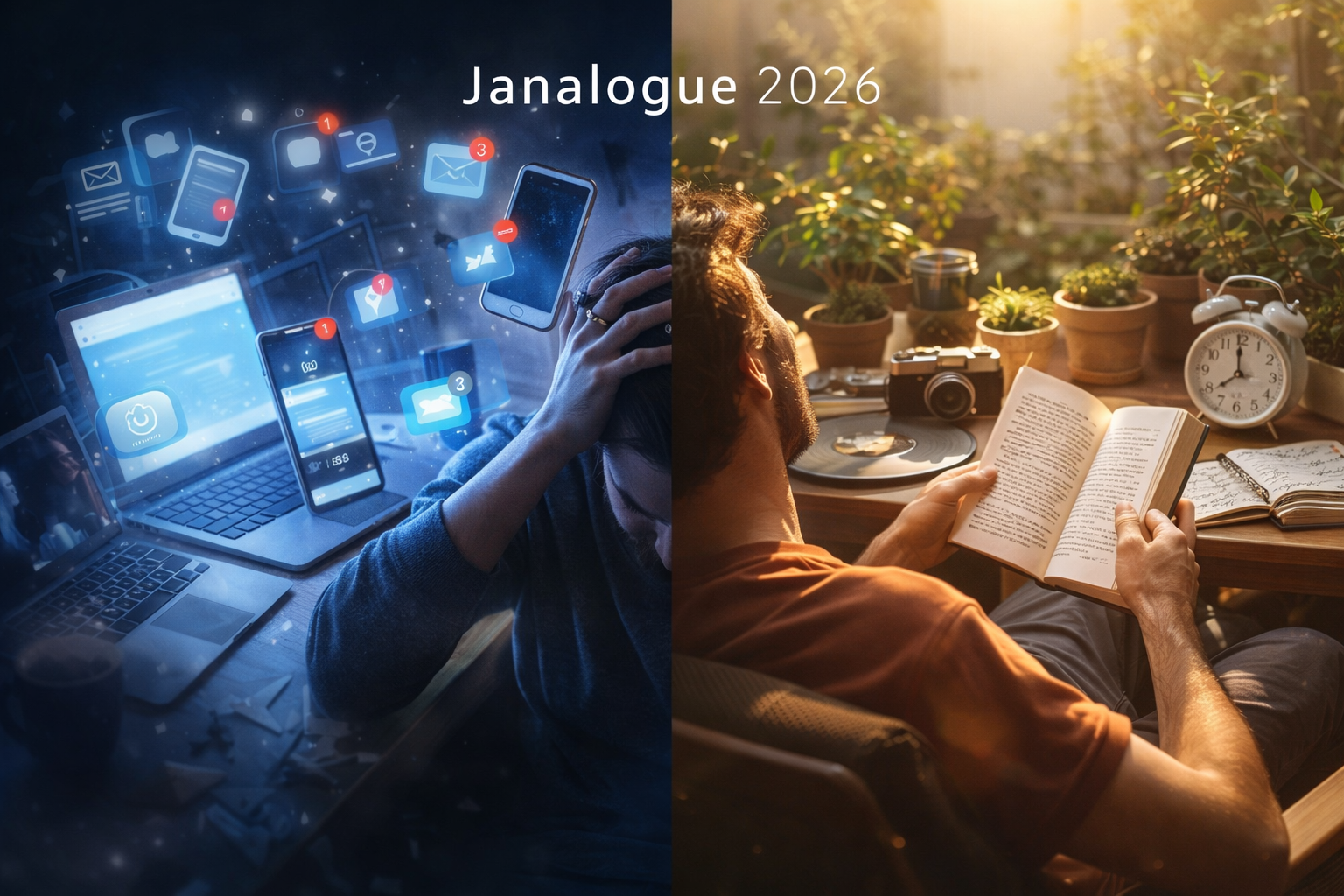
In a deliciously ironic twist, one of 2026's biggest wellness trends is spreading across social media platforms while encouraging people to... get off social media. Welcome to "Janalogue" (or "Analog January"), a movement that's transforming how we think about our relationship with technology.deseret+3
What Is Janalogue?
"Janalogue" refers to intentionally going offline and embracing screen-free, analog activities throughout January and beyond. The trend encourages reading physical books, using traditional alarm clocks instead of smartphones, banning devices from bedrooms, and rediscovering hobbies that don't involve screens. Instagram posts tagged #analogera and #janalogue2026 show people proudly displaying their flip phones, physical planners, vinyl records, and screen-free evenings.instagram+3
As one wellness influencer put it: "2026 is the analog year... it's time to hit pause on the digital overload and rewind to a simpler era full of nostalgia and analog charm".instagram
Why "Unplugging" Became 2026's Defining Trend
From Wellness Fad to Mental Health Necessity
Digital detoxing has evolved from a fringe wellness concept to an essential intervention for mental health in 2026. What was once considered extreme is now mainstream, with "unplugging" no longer viewed as a temporary cleanse but as a permanent lifestyle shift.safety4sea+2
Screen Fatigue Is Real
People spend an average of 2 hours and 45 minutes daily on social networks alone in 2025, up from 2 hours in previous years. Add work emails, streaming services, and endless scrolling, and we're looking at 8-12 hours of daily screen time for many adults. The result? Physical eye strain, mental exhaustion, disrupted sleep, and a profound sense of disconnection from real life.deliberatedirections+1
Gen Z Leads the Revolution
Ironically, Gen Z—the generation raised on smartphones—is now driving the digital detox movement. According to recent surveys, 46% of Gen Zers are actively limiting their screen time, recognizing that constant connectivity isn't the same as true connection. Even Gen Alpha (ages 8-10) is part of this shift, with nearly 75% preferring to go outside and use technology less to manage their mental health.thinklikeapublisher+1
Searches for "digital detox vision board" have increased by 273%, while "digital detox ideas" are up 72%. This isn't just talk—81% of Gen Z workers wish disconnecting at work were easier, and the same percentage support regular digital detoxes in workplace culture.deliberatedirections
The Analog January Challenge
Pioneered by productivity expert Cal Newport, the Analog January Challenge offers a structured approach to reclaiming analog life. The challenge includes five monthly commitments designed to reduce screen dependency:calnewport
1. Move Daily
Commit to a 15-minute walk every single day without your phone. Simply observe the world and think.calnewport
2. Connect with 20 People
Hold real conversations (in person or via voice call) with 20 different people during the month. Text-based communication doesn't count—you must hear the other person's voice.calnewport
3. Make Something
Engage in a skilled hobby that requires interacting with the physical world—knitting, drawing, woodworking, building circuits, biking, or Brazilian Jiu Jitsu. Screen-based activities don't count.calnewport
4. Read Physical Books
Replace digital consumption with reading actual books.deseret+1
5. Eliminate Bedroom Screens
Ban phones, tablets, and TVs from your sleeping space, using an analog alarm clock instead.deseret+1
The Analog Lifestyle Movement
Analog Bags and Device-Free Accessories
The 2026 analog movement has spawned a whole aesthetic. "Analog bags"—stylish pouches designed to hold your phone when you're intentionally unplugging—have become status symbols. People are proudly displaying flip phones, physical planners, custom mixtapes, and vintage cameras on social media (yes, before they unplug).instagram+1
The "Martha Stewart Summer" Effect
Pinterest reports a surge in searches for offline activities like farm-to-table cooking, urban gardening, journaling, and intentional analog hobbies. This nostalgic embrace of pre-digital skills represents a cultural shift toward valuing craftsmanship and presence over productivity and multitasking.deliberatedirections
Why This Trend Resonates So Deeply
FOMO is Exhausting
The fear of missing out (FOMO) creates significant stress when constantly exposed to others' curated highlight reels. Social media makes FOMO more obvious and psychologically damaging, creating profound envy that can damage relationships. By removing social media, you eliminate exposure to artificial comparisons that don't matter to your actual life.deliberatedirections
Boredom Has Value
Digital detox helps reactivate the Default Mode Network—the brain state responsible for deep thought, imagination, and creativity. When we're constantly stimulated by screens, we never enter the productive boredom that generates insight and innovation. The analog movement reclaims boredom as valuable rather than anxiety-inducing.deliberatedirections
Offline is Becoming a Luxury
In 2026, being offline has transformed from a constraint into a status symbol. The ability to disconnect signals confidence, discipline, and control over your attention—qualities increasingly rare in our hyperconnected world. People want quiet confidence, real connection, and moments that don't need to be posted.thinklikeapublisher
The Business Case for Digital Detox
The market for digital detox apps is projected to reach $19.44 billion by 2032, up from just $0.39 billion in 2023, reflecting explosive demand for digital wellness solutions. These tools include apps that block access to certain features, enforce time delays, or include social accountability mechanisms when users try to access specified apps.deliberatedirections
The most successful business leaders understand that managing digital consumption directly impacts decision-making quality and strategic thinking capacity. Companies are beginning to support digital detox culture, recognizing that constantly connected employees aren't necessarily more productive—they're just more exhausted.deliberatedirections
8 Life-Changing Benefits of a Digital Detox
Time Freedom
Social media detox frees up significant time for essential activities. Extra hours can be used for chores, passion projects, reading, or starting new ventures. When you eliminate mindless scrolling, you unlock hours for activities that truly matter.deliberatedirections
Improved Sleep
Banning screens from bedrooms and using analog alarm clocks dramatically improves sleep quality. Blue light exposure before bed disrupts circadian rhythms, while the stimulation from notifications and content keeps your brain in alert mode when it should be winding down.vailhealth+1
Enhanced Mental Health
Depression and anxiety often result from technology overuse, whether due to overall exhaustion, comparison culture, or constant stimulation. Digital detox provides space for genuine reflection and emotional processing.vogue+1
Better Relationships
Real conversations—the kind where you hear someone's voice and observe their body language—create deeper connections than endless text exchanges. The challenge to have 20 real conversations in a month forces intentionality in relationships.calnewport
Increased Creativity
Engaging with the physical world through hobbies like crafting, building, or athletics challenges your problem-solving skills in ways screens never can. Overcoming the resistances of the physical landscape is what our minds evolved to understand as productive action.calnewport
Reduced Decision Fatigue
Constant notifications, app switching, and information overload deplete mental energy. Decluttering your digital life—deleting unused apps, closing endless tabs, managing your inbox—conserves cognitive resources for decisions that actually matter.vogue
Authentic Living
People are tired of filters, noise, and fake perfection. They want to stop performing their lives online and start actually living them.thinklikeapublisher+1
Reclaimed Attention
Perhaps most importantly, digital detox returns control of your attention to you. Instead of algorithms deciding what you see, think about, and feel, you reclaim agency over your mental landscape.deliberatedirections
You Don't Have to Go Full Analog
The beauty of the Janalogue movement is its flexibility. You don't need a burner phone or to delete all social media permanently. Start small: one screen-free evening per week, phone-free walks, or designated "analog hours" each day.casabona+2
As digital wellness expert Joe Casabona puts it in his 2026 yearly theme: "Continue the trend of less social media. Do more with the physical world". It's a simple charge with profound implications.casabona
Unplugging isn't about rejecting technology—it's about rebalancing it. The future of well-being won't come from the next app or device; it'll come from our ability to step away from them intentionally. In a world designed to capture and monetize your attention, the radical act of unplugging becomes the ultimate form of self-care.deseret+2
2026 marks a cultural shift back to what feels real. Sometimes, the best way to truly connect is by disconnecting.thinklikeapublisher+
-(2).png)
Comments 0
No comments yet
Be the first to share your thoughts!
Leave a Comment