
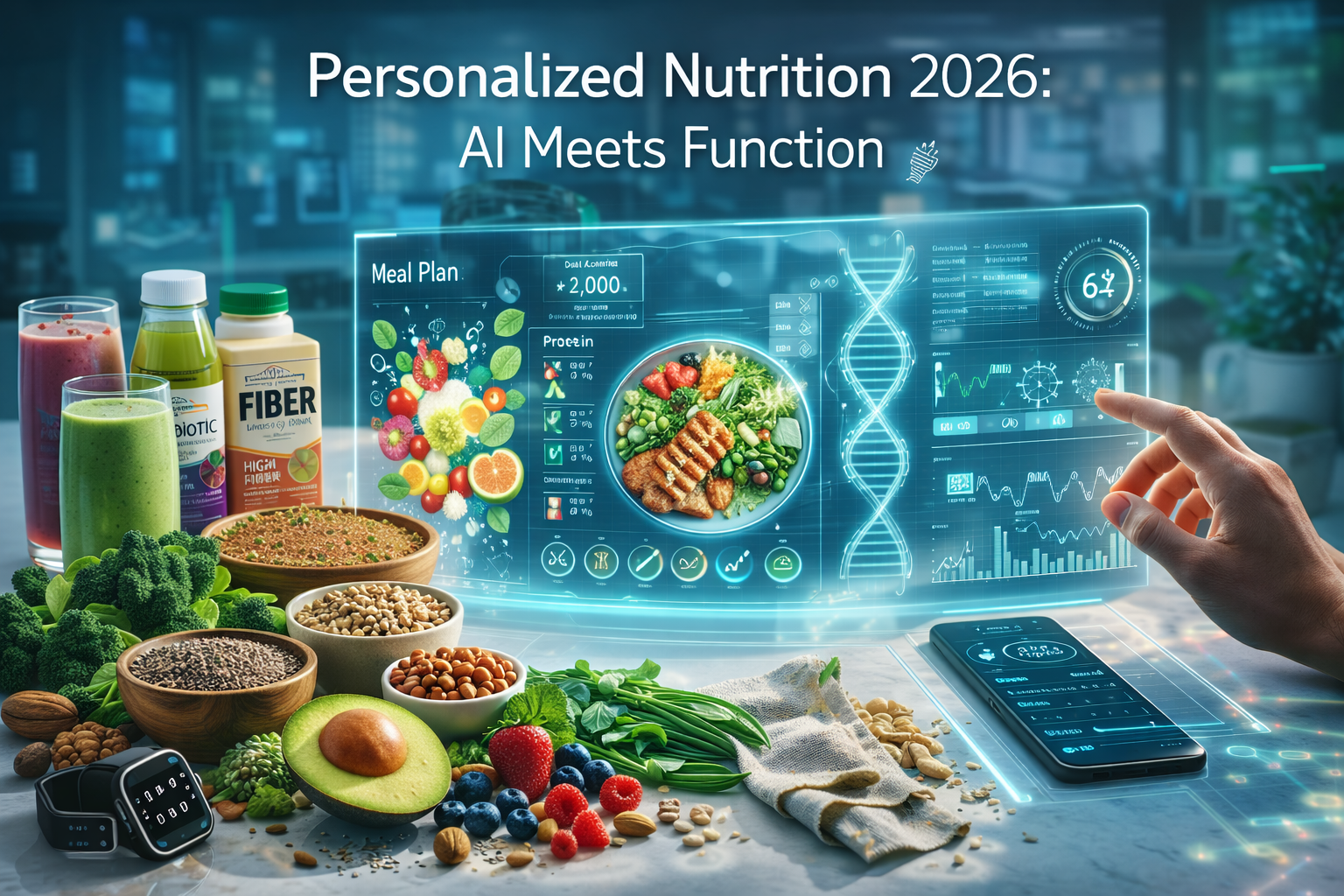
The era of one-size-fits-all diets is over. In 2026, personalized nutrition and functional foods are fundamentally reframing how we approach eating, shifting from generic dietary rules to customized solutions aligned with individual health needs, genetics, lifestyle, and real-time biometric data.khni.kerry+2
The Personalized Nutrition Explosion
From Premium to Mainstream
Precision nutrition is moving from elite wellness circles to everyday consumers in 2026. The convergence of artificial intelligence, genomics, and wearable technology is making personalized nutrition accessible and practical for the mass market.pmc.ncbi.nlm.nih+1
"In 2026, personalization is no longer a buzzword. It defines how the main market evolves," reports Tastewise consumer data analysis. "Consumers want solutions aligned with energy needs, hormonal balance, or cognitive performance. Not averages. Not assumptions".[tastewise]
How It Works
Modern personalized nutrition systems leverage:
Real-Time Biometric Data:[khni.kerry]
Continuous glucose monitoring
Microbiome analysis
Wearable device metrics (sleep, activity, heart rate)
Lifestyle factor tracking
Advanced Technologies:pmc.ncbi.nlm.nih+1
AI and machine learning algorithms
Genomic testing (OMICS data)
Digital health platforms
Virtual nutritionist frameworks
Outcome:
Individualized diet plans and meal recommendations that update dynamically as your body's needs change throughout the day.news4sanantonio+1
AI-Driven Dietary Revolution
The Virtual Nutritionist
Groundbreaking research published in 2025 introduced AI-driven dietary recommendation systems featuring a "virtual nutritionist" - an iterative validation framework that dynamically refines recipes to meet predefined nutritional and sustainability criteria.[pmc.ncbi.nlm.nih]
Key Features:[pmc.ncbi.nlm.nih]
Generates personalized smoothie recipes prioritizing health outcomes
Ensures environmental sustainability
Provides real-time, personalized recommendations
Bridges gap between AI insights and clinical dietary management
Offers scalable solution for chronic disease management
The system consistently generates recipes aligned with dietary guidelines for obesity and type 2 diabetes while promoting sustainable practices and enhancing health literacy.[pmc.ncbi.nlm.nih]
How AI Nutritionists Work
Unlike traditional nutrition planning requiring multiple costly in-person consultations, AI nutritionists streamline the entire process:[thedecisionlab]
Capabilities:[thedecisionlab]
Automate collection and analysis of personal health data
Generate recipes catering to dietary restrictions
Optimize use of available ingredients
Track caloric intake and monitor dietary goals
Analyze current health data to create customized guidance
Adapt meal plans for dietary sensitivities, allergies, or health conditions
Provide affordable, timely individualized nutrition guidance
The Result:
Machine learning-powered systems that continuously improve recommendations based on your feedback and changing health metrics.[thedecisionlab]
Function-Driven Eating Takes Center Stage
Beyond Calories: Food as Medicine
2026 diet trends favor function-driven eating where meals are expected to support long-term health goals while fitting into everyday life.projectfoodbox+1
"2026 health trends are reframing the role of nutrition by positioning Food as Medicine for better prevention and chronic disease management," explains Project FoodBox.[projectfoodbox]
The Protein-Plus Trend
Product launches in 2026 lean heavily into the "protein-plus" trend - pairing high-protein bases with added ingredients tied to clear functional benefits.[news4sanantonio]
Major Brand Examples:[news4sanantonio]
Nestlé:
High-protein frozen ready meals
Proprietary whey microgel raising protein levels in milk drinks
Danone:
Protein shots delivering 10 grams per serving
Formulated to support muscle health
These products move protein beyond simple counts into added functional benefits targeting specific health outcomes.[news4sanantonio]
The Functional Foods Market Boom
Explosive Growth Projections
The functional foods market is experiencing unprecedented expansion:
Market Size:grandviewresearch+1
Global market value: $233.8 billion in 2024
Projected growth: $586.1 billion by 2030 (Grand View Research)[grandviewresearch]
Alternative projection: $386.2 billion by 2033 (IMARC Group)[imarcgroup]
Growth rate: 8.5% CAGR (2024-2030)[grandviewresearch]
Alternative CAGR: 5.45% (2025-2033)[imarcgroup]
What's Driving Growth
Key Market Drivers:imarcgroup+1
Shift from traditional to enriched nutraceutical products[grandviewresearch]
Increasing consumer awareness of preventive healthcare[grandviewresearch]
Rising demand for vitamin and mineral-fortified foods[grandviewresearch]
Growing geriatric population with specific nutritional needs[imarcgroup]
Technological advancements in food technology[imarcgroup]
Supportive government initiatives promoting functional foods[imarcgroup]
Social status symbolism of premium nutrition-infused products[grandviewresearch]
Popular Functional Food Categories
Food manufacturers are fortifying products with:[grandviewresearch]
Dietary fibers
Omega-3 fatty acids
Vitamins and minerals
Probiotics and prebiotics
Antioxidants
Plant-based proteins
Trending Functional Foods:
Fiber-enriched pasta, bread, and beverages[news4sanantonio]
Gut-friendly products with prebiotics and probiotics[news4sanantonio]
Products designed to work with the microbiome[news4sanantonio]
Mushroom lattes and nootropic drinks[tastewise]
Electrolyte waters formulated for cognitive clarity[tastewise]
Functional Beverages Lead Innovation
88% Consumer Interest
Tastewise survey data reveals that nearly 88% of respondents expressed interest in innovation within functional beverages.[tastewise]
Popular Categories:[tastewise]
Mushroom lattes - cognitive and immune support
Nootropic drinks - mental clarity and focus
Electrolyte waters - formulated for clarity rather than just stimulation
Prebiotic sodas - gut health support
Adaptogenic beverages - stress management
These beverages target specific outcomes like energy needs, hormonal balance, or cognitive performance rather than general nutrition.[tastewise]
Fiber: The Functional Superstar
Fiber-Forward Product Launches
Producers are responding to consumer demand with functional options built around digestive and immune health.[news4sanantonio]
Added fiber now appears in:[news4sanantonio]
Familiar staples like pasta
Bread and baked goods
Beverages and smoothies
Snack foods
Consumer Behavior:
Whole grains, legumes, vegetables, seeds, and nuts continue to gain ground as people cut back on heavily processed snacks[news4sanantonio]
Diet plans emphasize variety, encouraging fiber from many foods instead of a single source[news4sanantonio]
Fiber is treated as a daily staple rather than a niche add-on[news4sanantonio]
The GLP-1 Medication Factor
Reshaping Nutritional Needs
Prescription weight-loss and diabetes drugs (GLP-1 treatments like Ozempic and Wegovy) are adding another layer to the personalized nutrition transformation.[news4sanantonio]
Impact on Food Choices:[news4sanantonio]
Medications often reduce appetite and cravings
Smaller portions become the norm
Demand rises for options that deliver strong nutrition in compact servings
Meals focus on quality and satisfaction rather than volume
This creates opportunities for nutrient-dense functional foods that maximize nutritional value per bite.[news4sanantonio]
Personalization Methods Expanding
How Consumers Personalize
Diet planning continues moving toward personal fit rather than one-size-fits-all rules:[news4sanantonio]
Modern Personalization Approaches:
Shaping eating habits around individual body needs and daily routines[news4sanantonio]
Adjusting meal choices based on sleep, activity, and recovery goals[news4sanantonio]
Using digital tools for meal suggestions[news4sanantonio]
Leveraging smart systems that update as wearable data changes[news4sanantonio]
Supplement Personalization
Nearly 1 in 3 consumers in the global nutrition market take supplements, with personalization influencing product offerings.[innovamarketinsights]
The personalized nutrition supplement market continues expanding as consumers seek targeted solutions for specific health concerns.[innovamarketinsights]
Convenience Meets Customization
Freezer Fine Dining
Convenience remains a driving force alongside personalization.[news4sanantonio]
The New Freezer Aisle:[news4sanantonio]
Premium meals, sides, and starters built for at-home dining
Global flavors and polished recipes
Balanced nutrition without sacrificing convenience
Designed for busy schedules and modern lifestyles
This "freezer fine dining" trend brings thoughtful, well-made options that feel personalized despite being mass-produced.[news4sanantonio]
The Five Megatrends for 2026
Kerry Health and Nutrition Institute identifies five key megatrends shaping personalized nutrition and functional foods:[khni.kerry]
Precision Nutrition - AI, genomics, and wearables making personalization mainstream
Real-Time Data Integration - Glucose, microbiome, and lifestyle factors informing dietary strategies
Individualized Obesity Management - Personalized approaches to weight control
OMICS-Based Menus - Recommendations shaped by genetic and lifestyle data
Evolving Technologies - Continuous innovation in health-tracking and dietary guidance systems
Government and Industry Support
Rising awareness campaigns by government agencies, NGOs, and companies have boosted consumer awareness of nutritional benefits offered by functional foods.[grandviewresearch]
Regulatory Environment:[grandviewresearch]
Changing government regulations
Increasingly stringent policies on food fortification
Focus on ensuring health and safety of consumers
Driving consumer attention toward healthy products
The Bottom Line
Personalized nutrition and functional foods represent a fundamental transformation in how we approach eating in 2026.khni.kerry+2
The market is shifting from:
❌ Generic dietary rules → ✅ Individual health needs
❌ One-size-fits-all diets → ✅ AI-driven customization
❌ Basic nutrition → ✅ Functional health outcomes
❌ Static meal plans → ✅ Dynamic, real-time adjustments
❌ Guesswork → ✅ Data-driven precision
With the global functional foods market projected to reach $586 billion by 2030 and AI-powered nutrition platforms becoming mainstream, this revolution is just beginning.pmc.ncbi.nlm.nih+1
"Diet trends in 2026 favor tailored eating patterns that address specific needs instead of broad rules for everyone," summarizes industry analysis. "This direction brings older practices back into focus and keeps the options practical for modern schedules and budgets, making the overall direction feel realistic rather than restrictive".[news4sanantonio]
The future of nutrition is personalized, functional, data-driven, and more accessible than ever before.thedecisionlab+2
-(2).png)
Comments 0
No comments yet
Be the first to share your thoughts!
Leave a Comment