
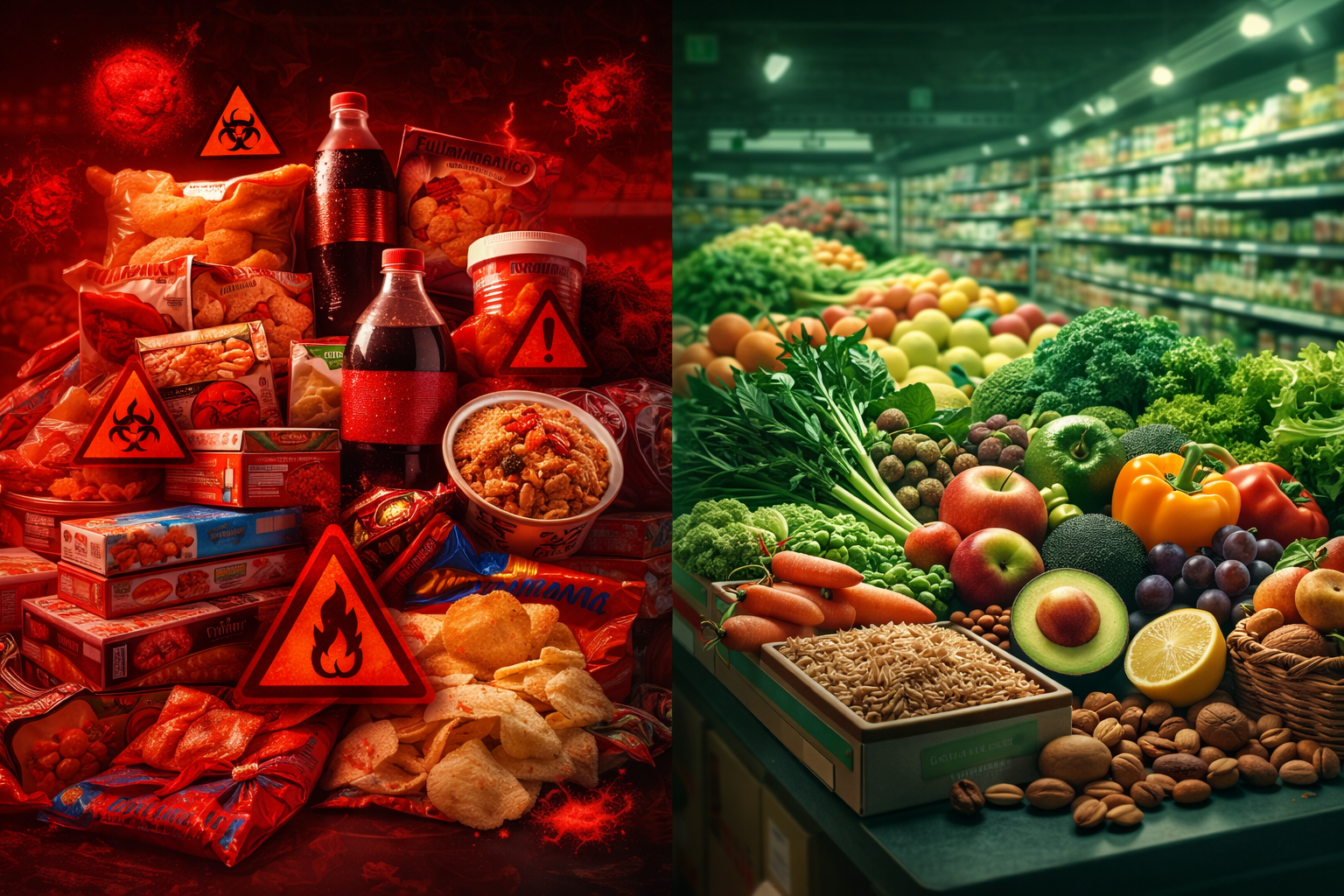
Ultra-processed foods (UPFs) now make up over half of the average diet in the U.S. and UK, transforming what we eat and wreaking havoc on nearly every organ system in the human body. What once seemed like convenient meal solutions have become what global health experts are calling a "silent epidemic" and a "seismic threat" to public health.bbc+1
The numbers are staggering: 55% of total calories consumed by Americans now come from ultra-processed foods, with youth consuming even more at 61.9% of daily calories. For certain demographics—particularly younger individuals, those with lower incomes, or residents of underprivileged areas—diets can contain up to 80% UPF.theguardian+1
What Are Ultra-Processed Foods?
Ultra-processed foods are industrially manufactured products containing ingredients you wouldn't typically find in a home kitchen. They're created using the NOVA classification system developed by Professor Carlos Monteiro at the University of São Paulo, Brazil.sciencemediacentre+2
Common UPFs include:
Packaged snacks and chips
Mass-produced bread and baked goods
Ready-to-eat or frozen meals
Instant noodles and soups
Sugary cereals
Flavored yogurts
Deli meats and hot dogs
Bottled salad dressings and sauces
Plant-based meat alternatives
Marinated tofu
Soft drinks and energy drinks
Candy and packaged dessertsgq+1
What makes them "ultra-processed":
Contains industrial additives not used in home cooking
Multiple processing steps
Chemical modifications
Added emulsifiers, stabilizers, and preservatives
Engineered flavors, colors, and textures designed for palatability and shelf lifepmc.ncbi.nlm.nih+1
The Shocking Health Consequences
A Global Scientific Review
The world's largest scientific review on UPFs, conducted by 43 top experts and analyzing 104 long-term studies involving nearly 10 million participants, revealed alarming findings.ihpi.umich+2
Ultra-processed foods are linked to harm in every major organ system.[theguardian]
Convincing Evidence (Class I)
The strongest scientific evidence shows UPF consumption significantly increases risk for:[bmj]
Cardiovascular disease-related mortality: 50% higher risk
Type 2 diabetes: 12% increased risk per 10% increase in UPF consumption
Anxiety disorders: 48% higher risk
Common mental disorders: 53% higher risk
Highly Suggestive Evidence (Class II)
Strong evidence links UPFs to:[bmj]
All-cause mortality: 21% higher risk
Heart disease-related death: 66% higher risk
Depression: 22% higher risk
Obesity: 55% higher risk
Adverse sleep outcomes: 41% higher risk
Wheezing and respiratory issues: 40% higher risk
12 Health Conditions Confirmed
Research found associations between UPF consumption and heightened risk of 12 health conditions:bbc+1
Obesity and overweight
Type 2 diabetes
Cardiovascular diseases
Hypertension (high blood pressure)
Dyslipidemia (abnormal cholesterol)
Kidney disorders
Depression
Anxiety
Gastrointestinal issues
Metabolic syndrome
Respiratory problems
Premature mortality from various causes
Of 104 studies reviewed, 92 reported elevated risks for at least one chronic disease and increased mortality from all causes.[theguardian]
How UPFs Damage Your Body
Mechanism 1: Chronic Low-Grade Inflammation
Ultra-processed foods promote systemic inflammation—a state where the body's immune system remains constantly activated, slowly damaging tissues and organs.fau+1
New research from Florida Atlantic University found that people consuming the highest amounts of UPFs (60-79% of daily calories) had an 11% higher likelihood of elevated hs-CRP levels—a key inflammation marker and strong predictor of cardiovascular disease. Even moderate UPF consumers (40-59%) showed a 14% increase.[fau]
UPFs trigger inflammation through:
High intake of sugars, salt, saturated fats, and trans fatty acids[pmc.ncbi.nlm.nih]
Chemical additives and non-nutritive components
Disruption of gut microbiota (the beneficial bacteria in your digestive system)[pmc.ncbi.nlm.nih]
Harmful chemicals and additives absorbed during processing[theguardian]
Mechanism 2: Nutrient Displacement
As UPF consumption increased from 53.5% of calories in 2001-2002 to 57% in 2017-2018, whole food consumption dropped from 32.7% to 27.4%—mostly due to people eating less meat and dairy.[nyu]
This displacement means:
Subpar nutritional quality overall[theguardian]
Missing essential vitamins, minerals, and fiber
Inadequate protein and healthy fats
Reduced antioxidant intake
Mechanism 3: Engineered Overeating
UPFs are scientifically designed to be hyperpalatable—engineered to hit the perfect combination of sugar, salt, and fat that triggers reward centers in the brain and promotes overeating.[theguardian]
This leads to:
Consuming more calories than needed
Reduced satiety signals (feeling full)
Food addiction-like responses
Weight gain and metabolic dysfunction
Mechanism 4: Chemical Exposure
Processing introduces harmful chemicals and additives not found in whole foods:[theguardian]
Emulsifiers that disrupt gut barrier function
Artificial sweeteners affecting metabolism
Chemical preservatives linked to inflammation
Plasticizers and packaging chemicals
Advanced glycation end products (AGEs) formed during high-heat processing
Who's Most At Risk?
Youth Are Consuming the Most
Youth ages 1-18 years consume 61.9% of their calories from UPFs—significantly higher than the 53.0% consumed by adults.[cdc]
This is particularly alarming because:
Eating patterns established in youth tend to persist into adulthood
Developing bodies are more vulnerable to nutritional deficiencies
Early metabolic damage can lead to lifelong health issues
Socioeconomic Disparities
UPFs disproportionately affect:
Lower-income populations (where UPFs are more affordable)
Residents of food deserts with limited fresh food access
Communities targeted by aggressive food marketing[theguardian]
The Corporate Profit Machine
Professor Carlos Monteiro warned that the rising intake of ultra-processed foods "is transforming diets globally, replacing fresh and minimally processed options".[bbc]
This shift is driven by:
Powerful multinational corporations prioritizing profits from ultra-processed products
Extensive marketing efforts targeting vulnerable populations (especially children)
Lobbying to undermine effective public health initiatives
Making addictive foods cheaper and more accessible than whole foods[theguardian]
The situation mirrors the early days of the tobacco control movement, where corporate interests fought against public health measures.[theguardian]
Hidden UPFs You Might Not Expect
Many foods marketed as "healthy" are actually ultra-processed:[gq]
Flavored yogurts (loaded with sugar and additives)
Plant-based meat alternatives (highly processed with long ingredient lists)
Marinated tofu (added preservatives and flavor enhancers)
Whole grain cereals (chemically processed despite "healthy" branding)
Protein bars (engineered products with multiple additives)
Bottled smoothies (pasteurized, preserved, with added sugars)
"Low-fat" products (sugar and chemicals replace natural fats)
A Glimmer of Hope
Despite the dire statistics, recent data shows a slight decline in UPF consumption:[cdc]
Among adults: decreased from 55.8% (2013-2014) to 53.0% (August 2021-August 2023)
Among youth: significant decrease between 2017-2018 and August 2021-August 2023
This suggests growing awareness may be starting to shift eating patterns.
What Can You Do?
Identify UPFs
Ask yourself:
Does it have more than 5 ingredients?
Are there ingredients you can't pronounce or wouldn't use at home?
Is it packaged in plastic with a long shelf life?
Does it contain emulsifiers, stabilizers, or artificial flavors?
If yes to most, it's likely ultra-processed.
Make Gradual Swaps
Replace frozen dinners with simple home-cooked meals
Choose plain yogurt and add fresh fruit instead of flavored versions
Swap chips for nuts, fresh vegetables, or homemade popcorn
Make your own salad dressings with olive oil and vinegar
Choose whole fruits over fruit juices or smoothies
Focus on Whole Foods
Prioritize foods with minimal processing:
Fresh fruits and vegetables
Whole grains (oats, brown rice, quinoa)
Legumes (beans, lentils, chickpeas)
Nuts and seeds
Fresh or minimally processed meats
Eggs and dairy
Herbs and spices
Ultra-processed foods represent a global public health crisis comparable to tobacco. With over half of our calories now coming from these engineered products, we're experiencing unprecedented rates of chronic disease, inflammation, and premature death.cdc+3
The evidence is clear and compelling: greater UPF exposure is associated with higher risk of adverse health outcomes, especially cardiometabolic disease, mental disorders, and mortality.[bmj]
Experts are calling for urgent action:[theguardian]
Regulation of UPF production and marketing
Policies to reduce consumption
Public health campaigns similar to anti-smoking efforts
Support for fresh food access in underserved communities
While governments slowly respond, individuals can take control by recognizing UPFs, understanding the risks, and gradually shifting toward whole, minimally processed foods.sciencemediacentre+1
Your health—and your family's future—may depend on it.
-(2).png)
Comments 0
No comments yet
Be the first to share your thoughts!
Leave a Comment