
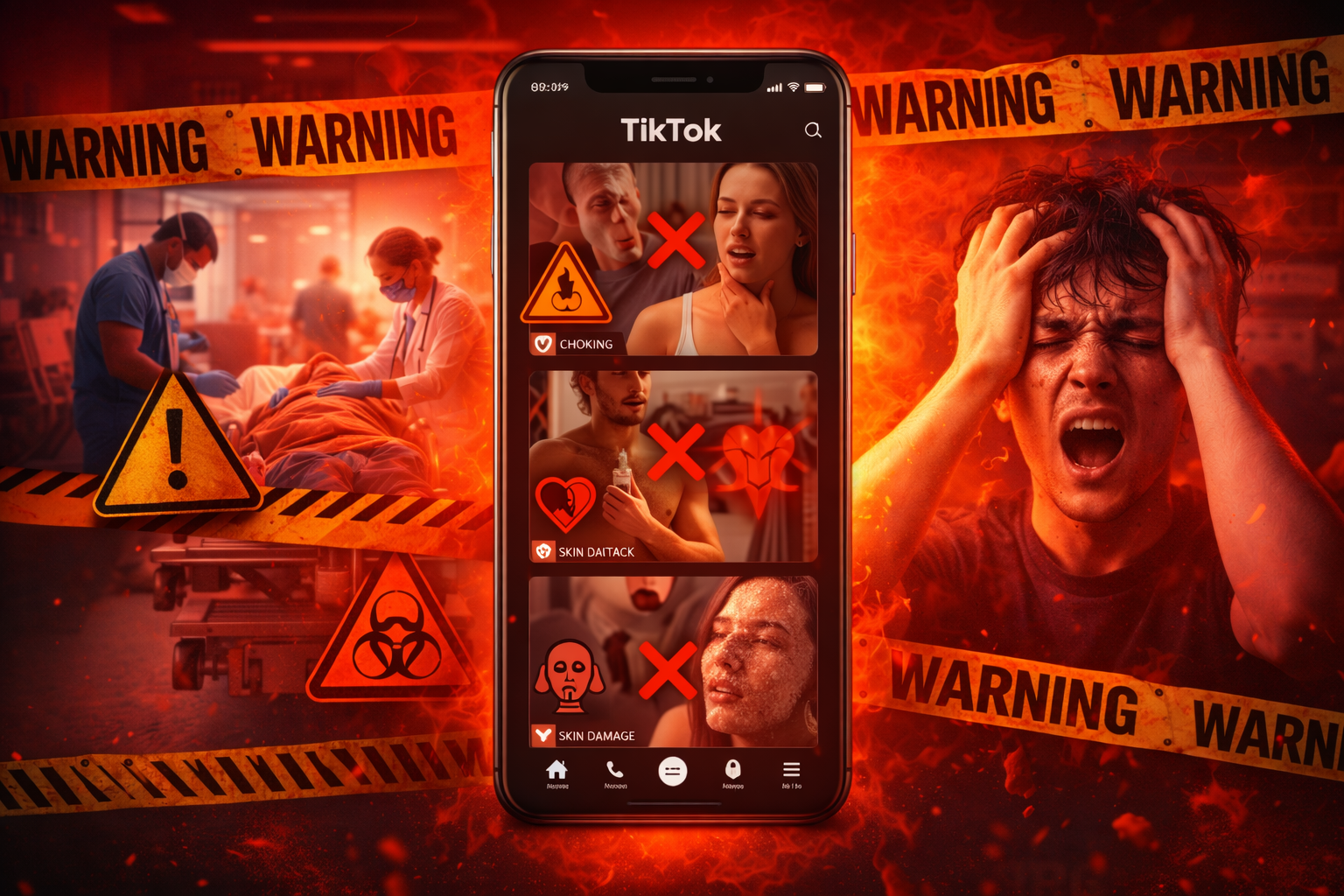
With over 5 billion users globally, social media has become the go-to source for health information—but it's also spreading dangerous misinformation faster than ever before. Platforms like TikTok, Instagram, and YouTube are flooded with viral health trends that promise quick fixes, dramatic results, and viral fame. The problem? Many of these trends can seriously harm or even kill you.thetasklab+2
Medical professionals are sounding the alarm as emergency rooms see increasing numbers of patients injured by social media health challenges. From heart attacks triggered by dry scooping to skin cancer risks from DIY beauty hacks, the consequences of following unverified online advice can be devastating.parkview+3
The Most Dangerous Trends You Should Avoid
1. Dry Scooping: A Heart Attack Waiting to Happen
What It Is:
Swallowing pre-workout supplement powder directly from the container without mixing it with water. Users claim it delivers an "extreme energy boost" for workouts.thetasklab+1
Why It's Viral:
TikTok videos show users experiencing intense energy rushes, making it seem like a performance hack.[poison]
The Reality:
Pre-workout supplements contain dangerously high amounts of caffeine and other stimulants. A single scoop can contain 150-300mg of caffeine—equivalent to 3-6 cups of coffee consumed in seconds.parkview+1
Serious Health Risks:
Choking and aspiration (inhaling powder into lungs)poison+1
Shortness of breath and respiratory infection[parkview]
Irregular heart rhythms (arrhythmias)[parkview]
Heart attackthetasklab+1
Stroke[parkview]
Tooth decay from citric acid exposure[parkview]
Medical Expert Warning:
Poison Control warns that dry scooping "can be life-threatening" and has resulted in emergency room visits and hospitalizations.[poison]
The Safe Alternative:
Always mix pre-workout supplements with the recommended amount of water and follow dosage instructions.[thetasklab]
2. Mouth Taping for Sleep: Suffocation Risk
What It Is:
Sealing your mouth shut with tape before sleeping, claiming it improves rest, reduces snoring, and promotes nasal breathing.[cnbc]
Why It's Viral:
The hashtag #MouthTape has 38.5 million views on TikTok.[cnbc]
The Reality:
Dr. David Schulman, a medicine professor at Emory University, says the answer to whether mouth taping works is likely negative.[cnbc]
Serious Health Risks:
Suffocation risk if nasal passages become blocked
Inability to breathe during sleep apnea episodes
Choking hazard if vomiting occurs during sleep
Skin irritation and allergic reactions
Anxiety and panic from restricted breathing
Who's Most at Risk:
People with sleep apnea, nasal congestion, allergies, or respiratory conditions face life-threatening risks.[cnbc]
3. Sunscreen Contouring: A Recipe for Skin Cancer
What It Is:
Applying sunscreen only to certain areas of the face while leaving other parts exposed to develop a "natural contour" through tanning.[naplesdermatologyandskincancer]
Why It's Dangerous:
This trend deliberately causes uneven sun damage and significantly increases skin cancer risk, including melanoma—the deadliest form.[naplesdermatologyandskincancer]
Dermatologist Warning:
Skin cancer doesn't discriminate based on your aesthetic goals. UV damage is cumulative and irreversible.[naplesdermatologyandskincancer]
4. Nasal Tanning Sprays: Melanoma in a Bottle
What It Is:
Using unregulated nasal sprays containing melanotan II to achieve a tan without sun exposure.[naplesdermatologyandskincancer]
Why It's Dangerous:
Melanotan II is NOT FDA-approved or safety-tested[naplesdermatologyandskincancer]
Linked to increased melanoma risk—the deadliest skin cancer[naplesdermatologyandskincancer]
Side effects include nausea, dangerous changes in moles, and skin abnormalities[naplesdermatologyandskincancer]
Expert Opinion:
Dr. Annie Liu warns: "Using these sprays could increase the risk for the worst skin cancer called melanoma, making them extremely dangerous".[naplesdermatologyandskincancer]
5. DIY Mole Removal: Playing Russian Roulette
What It Is:
Using at-home devices, acids, or "natural" remedies to remove moles without medical supervision.[naplesdermatologyandskincancer]
Why It's Dangerous:
Can't distinguish between benign moles and melanoma
Removes surface lesion but leaves cancerous cells underneath to spread
Causes scarring, infection, and disfigurement
Delays potentially life-saving diagnosis[naplesdermatologyandskincancer]
The Safe Alternative:
Always have moles examined and removed by a board-certified dermatologist who can biopsy suspicious lesions.[naplesdermatologyandskincancer]
6. Self-Injecting Fillers: Emergency Room Nightmares
What It Is:
Purchasing dermal fillers online and self-injecting without medical training.[naplesdermatologyandskincancer]
Why It's Dangerous:
Blindness from injecting into blood vessels near eyes
Tissue death (necrosis) from blocked blood flow
Stroke from filler entering arteries
Severe infection from non-sterile technique
Permanent disfigurement[naplesdermatologyandskincancer]
7. "What I Eat in a Day" Videos: Triggering Disordered Eating
What It Is:
Influencers sharing everything they eat in 24 hours, often showcasing extremely restrictive diets.[health.clevelandclinic]
Why It's Harmful:
These videos promote disordered eating by encouraging dangerous comparisons.[health.clevelandclinic]
Expert Warning:
Registered dietitian Julia Zumpano explains: "Watching these videos can launch you into the comparison game and implicitly shame you into eating less than is healthy for your body".[health.clevelandclinic]
The Reality:
Each body's daily calorie needs vary by age, sex, activity level, and other factors. What works for an influencer could be dangerously inadequate for you.[health.clevelandclinic]
Why Social Media Health Trends Are So Dangerous
1. Misinformation Spreads Faster Than Facts
Emotional appeal and sensationalism cause false health claims to spread faster and more broadly than accurate information.[pmc.ncbi.nlm.nih]
Examples of viral misinformation:
"Alkaline diets cure cancer"
"Vaccines cause infertility"
False COVID-19 treatment claims[pmc.ncbi.nlm.nih]
These false claims can dissuade individuals from seeking appropriate medical care.[pmc.ncbi.nlm.nih]
2. Algorithms Amplify Dangerous Content
Social media algorithms prioritize engagement over accuracy. Content that shocks, surprises, or promises miracle results gets promoted—regardless of whether it's safe or scientifically sound.harvardpublichealth+1
3. Normalization of Risky Behaviors
Platforms like Instagram, TikTok, and Snapchat frequently feature alcohol, marijuana, vaping, and party-related content—often shared without health warnings by influencers.[pmc.ncbi.nlm.nih]
Studies show this exposure is linked to teenagers' increased intentions and actual use of alcohol and nicotine.[pmc.ncbi.nlm.nih]
4. Lack of Credible Sources
Research analyzing health information on TikTok found that much of the advice comes from non-experts with zero medical training.[biologicalsciences.uchicago]
Meanwhile, content from actual healthcare professionals gets buried under viral entertainment.[biologicalsciences.uchicago]
5. Fear-Mongering and Health Anxiety
For the one in eight Americans already anxious about their health, social media algorithms reinforce anxiety by serving a constant stream of terrifying content:[harvardpublichealth]
Rare cases of flesh-eating bacteria
Young people with brain cancer
Unexpected fatal conditions
This creates a cycle of health anxiety and compulsive checking.[harvardpublichealth]
The Broader Impact on Health Behaviors
Negative Consequences Linked to Social Media Use
Research shows excessive social media use is associated with:[pmc.ncbi.nlm.nih]
Poor sleep hygiene
Reduced physical activity
Increased sedentary time
Poor dietary habits
Elevated risks of depression and anxiety
Self-harm behaviors
Disordered eating
These effects are especially pronounced among adolescents and young adults.[pmc.ncbi.nlm.nih]
How to Protect Yourself
1. Verify Before You Try
Ask yourself:
Is this advice from a licensed healthcare professional?
Has this been studied and peer-reviewed?
What are the potential risks and side effects?
Would my doctor approve?
If you can't answer yes to all four, don't do it.
2. Red Flags for Dangerous Trends
Warning signs include:
Promises of quick, dramatic results
"Miracle cure" language
No mention of risks or side effects
Encouragement to bypass medical professionals
Products or methods not FDA-approved
"Secret" or "suppressed" information claims
3. Consult Real Experts
Before trying any health trend, talk to your doctor, dermatologist, or registered dietitian.clevelandclinic+1
Medical professionals can:
Assess your individual health status
Identify contraindications
Provide evidence-based alternatives
Monitor for adverse effects
4. Improve Your Digital Health Literacy
Learn to:
Identify credible health sources
Recognize misinformation tactics
Understand the difference between anecdotes and evidence
Question viral claims before accepting them
5. Be Especially Cautious With:
Supplements and substances (risk of poisoning, interactions, contamination)
DIY medical procedures (infection, scarring, misdiagnosis)
Restrictive diets (nutritional deficiencies, eating disorders)
Skin treatments (burns, cancer risk, permanent damage)
"Biohacking" (organ damage, hormonal disruption)
Social media has the potential to be a powerful platform for health promotion—but it also carries serious risks of disseminating misinformation, exacerbating health disparities, and fostering dangerous behaviors.[pmc.ncbi.nlm.nih]
The duality is clear: while social media can educate and connect, it can also harm and mislead—especially vulnerable populations like teenagers and young adults.[pmc.ncbi.nlm.nih]
Before following any viral health trend, remember:
Your life and health are not worth viral fame
What works for an influencer could kill you
Medical professionals spend years training for a reason
Emergency room visits cost far more than doctor consultations
When in doubt, sit it out
In an era where anyone can post health advice to millions, your best defense is critical thinking, skepticism, and consultation with real medical professionals.biologicalsciences.uchicago+2
Don't let a 15-second video become a lifetime of regret—or worse, a life-threatening emergency.
-(2).png)
Comments 0
No comments yet
Be the first to share your thoughts!
Leave a Comment